
You can clearly see that you are a good tutor. Your students recommend you and have consistent progress. However, your hourly rate hasn't moved in two years. You tried to raise it, but at least one student leaves because of the new price.
In this guide we talk about why online tutors reach a rate ceiling and how to break it. We will cover topics such as how to expand your students' geography and how to prospect the students who are willing to pay at higher rates.
So let's dive in.
Why Most Online Tutors Stay Stuck at the Same Rate
First, let's understand why most online tutors often find themselves stuck at the same rate. The tutoring market has a structural problem which is unseen by most of the teachers until they see the connection between their income and hours worked.
Platforms like Preply, Superprof, Tutoroo, and similar marketplaces create a price comparison environment where tutors are ranked partly by rate, which means the most visible tutors are often the cheapest ones.
Tutors on these platforms frequently undercut each other to improve their search ranking, and over time, the entire platform calibrates to a lower price point.
If you've built your student base through platforms like these, then you've been operating inside a market that was designed to limit your earning potential.
So the first thing to understand is: your earning ceiling is the channels of where you find your students.
The same dynamic appears in local word-of-mouth. Each city and country is highly limited to the perception of what a tutor "should" cost. This expectation usually relies on the cheapest available option, not the best.
The tutors who earn $80+ per hour for individual online lessons have done one thing differently: they've decoupled their rate from local market expectations.
Why the Tutoring Rates Geography Changes Everything
Just think about it. The lesson with the same content, same quality and same tutor is worth different amounts of money depending on where the student is paying from.
A private lesson at $35 per hour might be an excellent value for money for students from the UK, a budget option for students from Canada, and a significant premium for students in certain European countries. So the price perception heavily depends on several factors given the geography.
The idea is simple: if you are looking for students only from your immediate local market or from aggregators, you are limiting your income to the price expectations of a single geography and the platforms' pricing structure.
By definition, online tutoring is location independent. You can teach a student from UK or USA from your home in Greece, without changing anything about how you teach. However, the rates that feel "normal" to each of those students will vary by several factors.
So if you search for students in markets where private tutoring rates are higher, you get access to your rate upgrade without changing anything about your teaching.
For example, let's see where international students typically come from for online English tutoring:
- UAE and Gulf region have strong demand for IELTS and professional English; high willingness to pay for private, structured lessons
- Canada and Australia are large immigrant populations seeking English support; rate expectations track local professional services
- UK has high demand for GCSE/A-Level support and IELTS prep; parents accustomed to paying for quality private tuition
- Western Europe, like Germany, Netherlands, Scandinavia have significant English-learning demand, premium rates compared to Eastern European markets
- Expat communities globally, e.g. families living abroad often seek tutors from their home region or tutors who understand the student's background.
How Hourly Rates Depend on Subject
The subject and area you teach significantly affects your international rate ceiling.
For example, English (ESL / EFL) remains the single highest-demand tutoring subject globally, with the widest geographic reach. However, you can teach for many different purposes. One of them is exam preparation (IELTS, TOEFL, SAT, GMAT). Those command a premium English tutoring because of high stakes.
Mathematics and STEM subjects have seen significant international demand growth, particularly for school-age students. Parents in high-income markets are willing to pay premium rates for strong math tutoring, often matching or exceeding English tutoring rates.
Subject combinations, for example, teaching maths in English or combining a specialist subject with language support can justify higher rates.
One important note: adjusting your approach for a student on a different curriculum is a skill that develops quickly and rarely requires significant overhaul of what you already know.
How to Actually Find Higher-Paying International Students
Once you get the idea that your student pool is extendable beyond the local market, the question becomes practical: where do you actually find these students?
Below we've combined several channels you can use to find new students at new rates.
- Social media / Facebook Groups: Great for expat communities. Groups are focused on expat families in specific cities.
- Social Media / LinkedIn: Effective for business-oriented tutoring, for example, business English or subject linked to career development.
- Direct Referrals: Remain the highest-conversion sources for rate increases.
What Students Actually Pay For (It's Not Your Credentials)
One of the most interesting insights that we found is that students do not often choose their tutor based on qualifications.
They choose based on how confident they feel that you understand their specific situation and can solve their specific problem.
The opportunity to run a trial lesson is a game-changer for the majority of students. It consists of deep listening and asking carefully about the student's goals, challenges, and past experiences. Then the tutor demonstrates the approach tailored to those specifics.
Hence, students are ready to pay more when they feel that the lesson is about them, given their individual characteristics.
Pro tip: Practical tip for your trial lesson:
- Spend the first 10-15 minutes in listening mode.
- Ask about a student's goals, why it matters to them, what have they tried before, what worked and what hasn't.
- Show your approach and discuss how it will suit the student's needs.
This creates a far more persuasive case for your rate than any certificate or years of experience can alone.
How Your Professional Setup Signals Your Price Tier
Students make rate judgments faster than most tutors realise and they make them partly based on what they see and experience in the first few minutes of a session.
A tutor who starts a lesson with "one moment, let me find the link" and then switches between five browser tabs while the student watches, subconsciously reduces the price for this lesson.
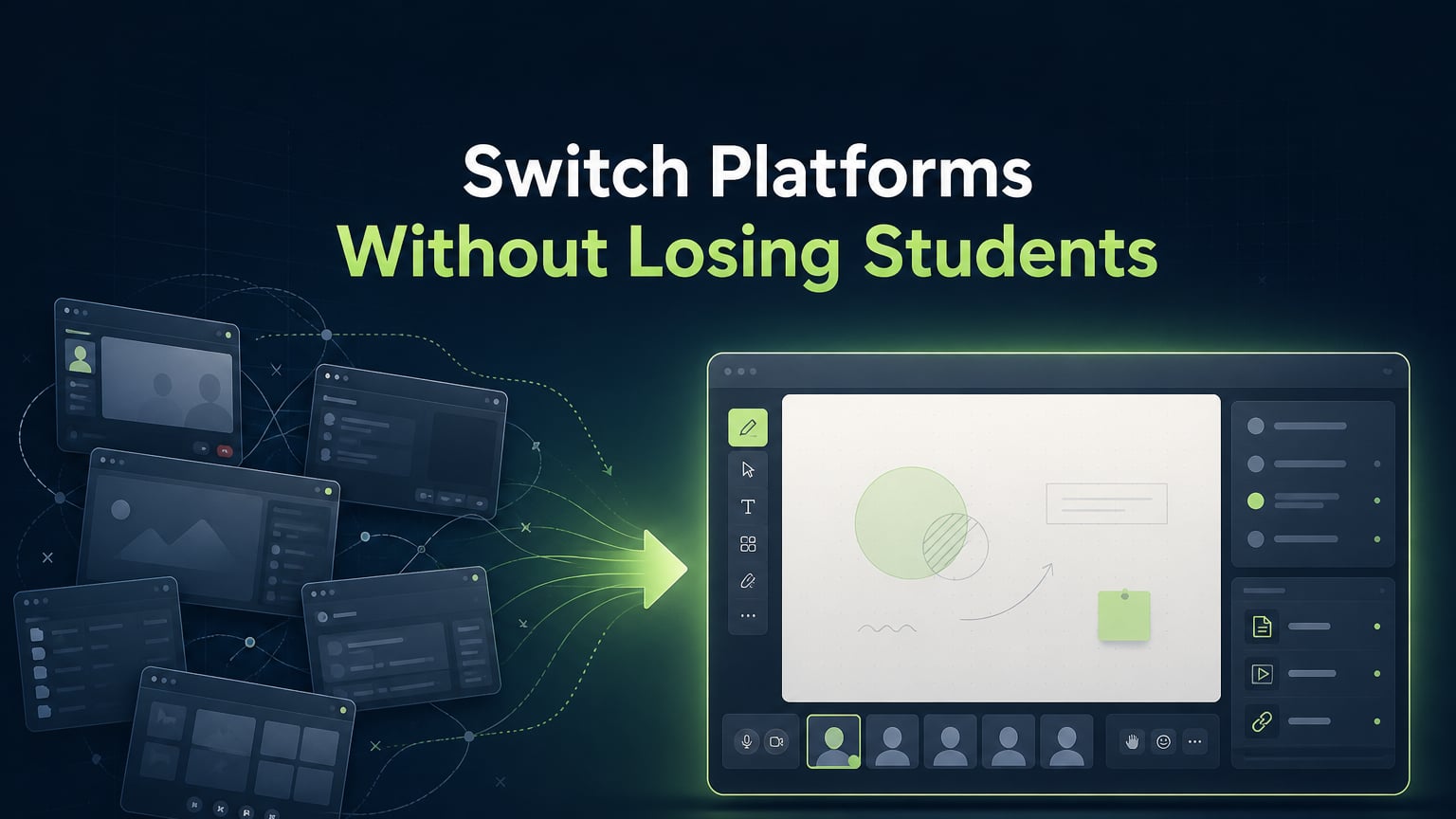
A tutor who starts a session in a dedicated, integrated classroom, where the video call, whiteboard, materials, and homework tools are all present from the moment the student joins, communicates something different. It signals preparation, structure, and the kind of investment in craft that justifies being paid well.
The interactive whiteboard in your setup is a visible sign of professionalism. Students who see a structured, well-prepared lesson environment are willing to pay more, because the environment itself is evidence that the rate is warranted.
This is also why keeping students engaged lesson to lesson and showing them their progress clearly are the ongoing justification for your pricing. Students who see structured lessons and measurable growth don't ask for discounts. They ask for more sessions.
How to Handle Rate Objections
Even with the right positioning and in right geography, some students will always push back on higher rates.
This is the most common objections and tutors need to learn how to handle them.
"That's more than I expected to pay."
In these cases, a student usually has some reference point - often from a platform or from a previous tutor. In order to handle those objections you should understand what would a comparable tutor with your subject charge in their local market? What is the cost of not achieving the student's goal? The value conversation replaces the price comparison.
"I found someone cheaper on [platform]."
They probably have. The question is what that cheaper option offers in the area the student actually cares about: reliability, structure, communication, and visible results. If you can articulate what your student experience looks like and why it produces better outcomes, the comparison weakens. Testimonials and saved lesson boards that show real student progress are more persuasive than any verbal claim.
"Can you offer a package discount?"
Package pricing is a legitimate and often effective tool for securing student commitment and smoothing income. Offering a block of 8 or 10 sessions at a modest discount is a reasonable way for a student to say "yes" without reducing your hourly rate. The discount rewards commitment. That's the key.
The Setup That Makes the Rate Believable
If you aim at charging more, you should reposition how you communicate the value. It requires a specific lesson setup that consistently delivers this value. It all begins with the lesson environment where teaching happens.
A virtual classroom built for professional tutors, where video, whiteboard, student profiles, homework, and progress tracking are all integrated, develops premium positioning. When your setup is professional, your teaching lands as professional. When your rate appears on an invoice, the student's experience has already justified it.
Class Spot was built specifically for individual and small-group online tutoring. Every feature, such as the interactive whiteboard, student reaction tools, homework module, lesson board saving, and student CRM is designed to make the tutor look and function like a serious professional. Because that's who uses it.
Frequently Asked Questions
How much should I charge for online tutoring?
Online tutoring rates vary significantly by subject, student location, and the tutor's level of experience and specialisation. General English tutoring by an experienced tutor ranges from $30–70 per hour in most English-speaking markets, with IELTS and exam preparation may be at the higher end of that range.
The most important factor in setting your rate is your ability to demonstrate student results clearly and attract students whose reference point for tutoring costs is calibrated to a higher market.
How do I find private tutoring students online without using aggregator platforms?
The most effective channels for finding direct private students are Facebook groups, LinkedIn for adult learners and professional English, and direct referrals from current students.
Why are my tutoring rates not increasing even though I have good reviews?
The most common cause is that your students were acquired in a low-rate environment and their expectations were set accordingly. The more sustainable approach is to attract new students at your target rate rather than raising rates on existing students.
Each new student acquired at the correct rate becomes a data point that normalises that rate within your practice.
Is it realistic to earn $60 or more per hour as an online tutor?
Yes, particularly for IELTS preparation, specialist subject tutoring, and one-on-one professional English. The key factors are the market you're targeting, the quality of your lesson experience, and your ability to demonstrate results through measurable progress rather than general testimonials.
How do I raise my rate with existing students without losing them?
Frame the increase around what has improved in your offering: your lesson structure, tools, or results tracking. Students who have experienced genuine improvement under your teaching will often accept a rate increase more readily than you expect. Students who push back hardest are often those who were never experiencing the full value of your work.